|
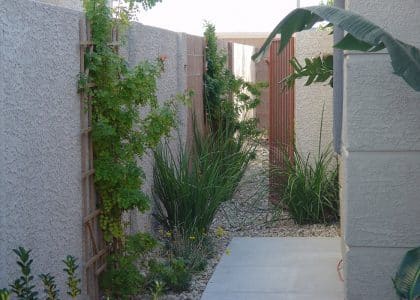
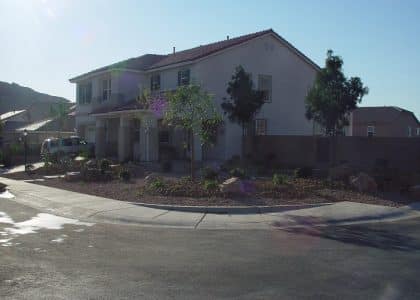
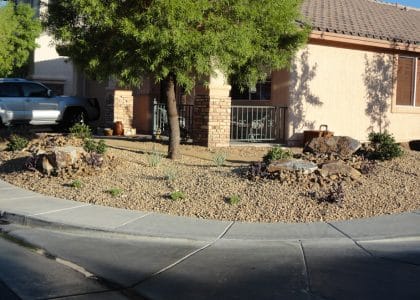
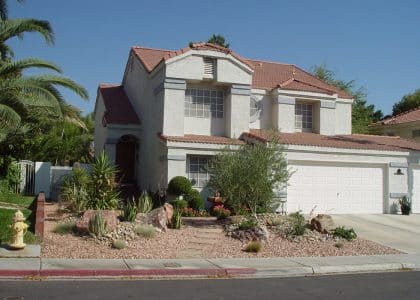
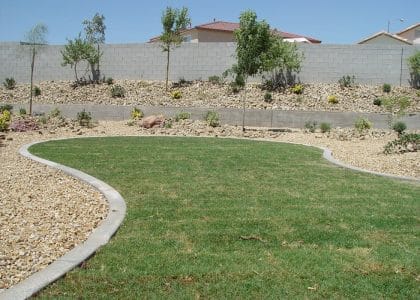
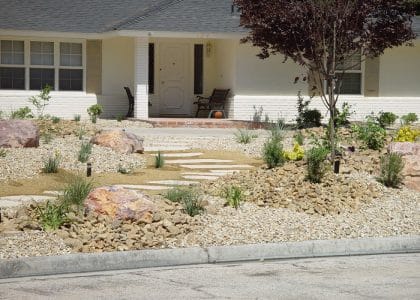
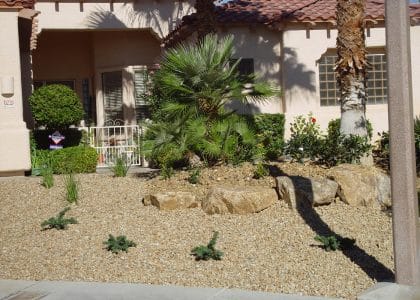
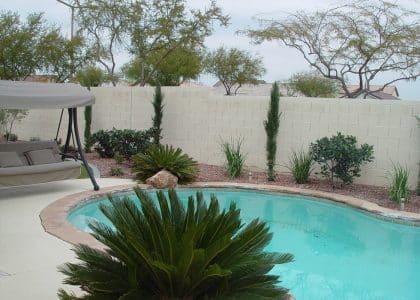
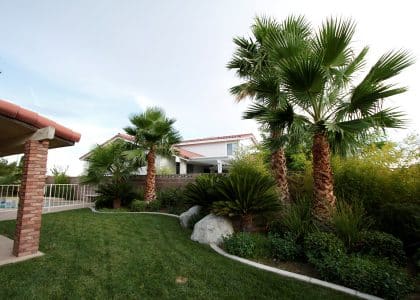
Why Xeriscaping In Our Desert Communities ?
See more Xeriscape Examples
- Conserves water
-
Provides lots of attractive planting options.
-
Presents minimal pest and disease problems.
-
Thrives with little fertilization.
-
Requires low pruning and maintenance.
-
Saves valuable landfill space!
More Detail on Xeriscaping See more Xeriscape Examples
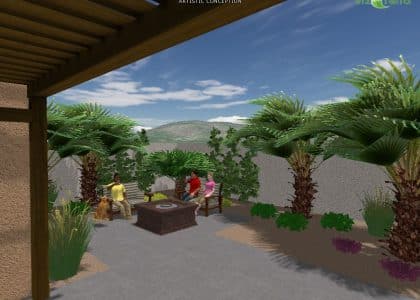
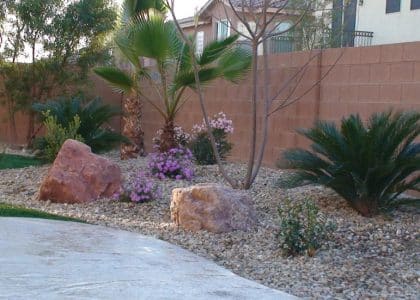
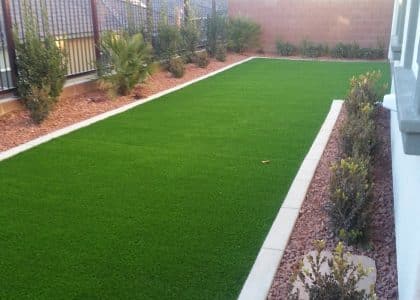
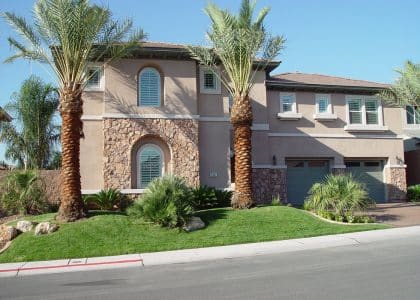
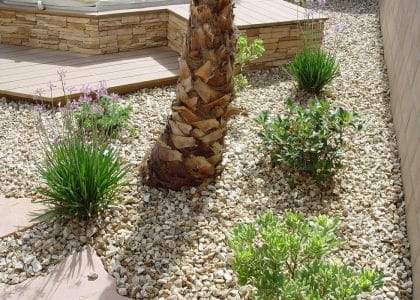
"xeri" derived from the Greek word "xeros" for dry; and "scape", meaning a kind of view or scene. While xeriscape translates to mean "dry scene," in practice xeriscaping means simply landscaping with slow-growing, drought tolerant plants to conserve water and reduce yard trimmings. Nevada’s limited supply of water, subject to ever increasing demands, is just one resource saved by xeriscaping. This results in immediate cost savings through lower water bills.
Xeriscaping can reduce the amount of plant trimmings which must be disposed of or otherwise managed, thereby helping your community, and ultimately you, to save resources. A reduction in plant trimmings can reduce the amount of labor needed to maintain a given landscape.
Xeriscapes generally require less fertilizer and fewer pest control measures than traditional landscapes. Because pesticides and fertilizers can inadvertently harm beneficial organisms, as well as impact air and water quality, reducing their use is a good idea. And, of course, using less of these materials saves money.
While indigenous plants are naturally accustomed to local climates and therefore good choices for water and waste efficient landscapes, xeriscaping doesn't mean planting Nevada native plants only. For example, one could draw from many available colorful drought tolerant plants native to other areas.
At Cacti we have the knowledge of all the local nurseries that can supply us so that your garden can have a personalized effect without sacrificing the efficiency of unthirsty plants.
|